A proxy route is most useful when it is managed across its whole lifespan rather than treated as a one time purchase. For teams that need a clearer way to choose, test, keep, refresh, and replace working IPs, INSOCKS can be viewed as a lifecycle platform instead of only a catalog of addresses. The homepage combines smart search, advanced proxy data, proxy rating, demo access, proxy history, flexible billing, and several proxy families, which makes it easier to decide not only what to buy, but also what deserves to stay in use later. That approach is practical for businesses that want less random route turnover and more deliberate maintenance over time. ✨
Why route lifecycle planning matters
A proxy route rarely stays valuable forever just because it connected once. Teams often begin with a route that looks acceptable, then discover that the real issue is not access alone, but the need to review quality, compare alternatives, and decide when the current lane still deserves time and budget. A platform that exposes more of these decisions up front lowers the chance that users keep weak routes too long or replace good routes too early. That is where lifecycle planning becomes useful instead of theoretical.
The homepage gives several signals that fit this way of working. It highlights smart search, advanced proxy info, proxy rating, proxy history, demo access, flexible billing, and instant activation, all of which matter more when a route is treated as an asset with a lifespan instead of a one click purchase. Those features let a team compare routes before activation, watch them during use, and return to history when a replacement or repeat purchase is needed. A route becomes easier to manage when selection and review live in the same place.
| Lifecycle stage | Homepage feature | Why it matters |
| First selection | Smart search and advanced proxy info | Helps narrow choices before money is spent |
| Initial proof | Demo access | Allows quick testing without a larger commitment |
| Daily use | Proxy rating and route data | Supports ongoing evaluation of quality and fit |
| Review point | Proxy history | Makes it easier to compare what worked before |
| Expansion point | API support and flexible plans | Helps a route move into larger workflows |
| Refresh point | Instant activation and repeat use inside one dashboard | Shortens the delay between replacement and resumed work |
Selection works better when route details are visible
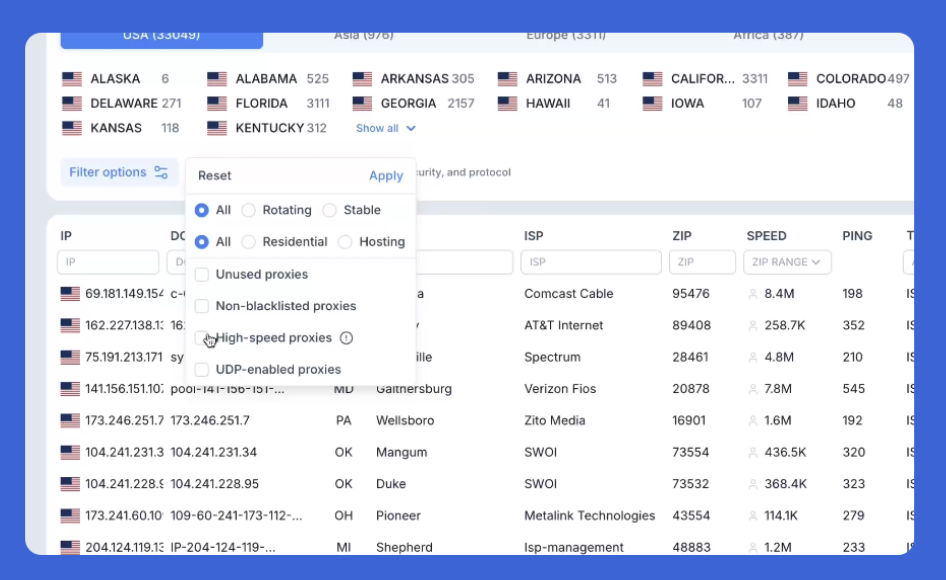
The homepage says advanced proxy information includes geo, ping, speed, DNS, and blacklist status. These are not decorative details, because they help the buyer judge whether a route deserves entry into the workflow at all. A route with weak location fit or unwanted blacklist status may be cheaper, but it can still become expensive once time is lost on corrections. Visibility at the start usually produces stronger lifecycle decisions later.
Demo testing reduces weak routes before they spread
INSOCKS says users can try demo proxies to evaluate speed, IP quality, rotation behavior, and authentication compatibility before scaling to production. That matters because lifecycle management should begin with a low risk proof stage instead of a full commitment. When the first check is small and controlled, a weak route can be rejected early rather than becoming part of a larger daily process. This is one of the cleanest ways to protect time and budget. ✅
History turns replacement into a repeatable decision
The homepage also highlights proxy history and says users can track usage and export reports. That matters because route replacement should be informed by what already happened, not by memory alone. A route that once performed well can be found again more quickly, while a weaker choice is less likely to be repeated by accident. Over time, history becomes part of the maintenance logic rather than a passive archive.
How product families fit different route lifespans
Not every route should live the same kind of life. Some categories are better for early research and local checks, some are better for stable long sessions, and others become more useful only when a workflow grows stricter or more specialized. The homepage helps here by separating residential, mobile, static, ISP, and UDP proxies and by tying each one to practical business tasks. That makes lifecycle planning easier because the next route can be chosen by stage as well as by purpose.
This product mapping matters when a team wants to move from one family to another without changing its whole environment. Residential routes are described as household ISP addresses for scraping, SEO tracking, price monitoring, and content verification across 195 countries. Mobile routes are presented as real 4G and 5G traffic for social media automation and ad verification, while static routes are described as dedicated addresses for account management, payment processing, API access, and whitelisted systems. ISP routes are framed as fast connections with ISP legitimacy, and UDP routes are positioned for VoIP, gaming, conferencing, and live streaming.
| Route family | Best lifecycle use | Main reason |
| Residential | Early research and local verification | Good trust and broad geographic realism |
| Mobile | Escalation for stricter social or ad tasks | Higher trust profile in mobile centered environments |
| Static | Long stable sessions and persistent account lanes | Fixed identity supports continuity |
| ISP | Faster mature workflows that still need a cleaner appearance | Balances speed and provider legitimacy |
| UDP | Specialized live traffic workflows | Correct fit for real time packet based tasks |
Residential routes often work as the first serious layer
Because the homepage positions residential routes for SEO tracking, price monitoring, and content verification, they often make sense early in a route lifecycle. They are useful when a team needs better realism than basic server traffic without jumping immediately to more specialized options. In practice, this makes them a strong starting layer for research driven workflows that may later grow into stricter or faster operations. A clean first layer makes later adjustments easier.
Static and ISP routes become valuable when repeat use grows
Static routes are described as dedicated addresses that do not change, while ISP routes are described as fast connections with ISP legitimacy for time sensitive operations. These categories usually become more important after a team already understands its task and needs either stronger continuity or better throughput with a cleaner profile. That means they fit naturally in the middle or later stages of a route lifecycle rather than always at the very first step. Growth becomes easier when the route family can mature with the task. ✅
Mobile and UDP routes should stay specialized
The homepage makes it clear that mobile and UDP routes solve more specific problems than general web research. Mobile is tied to social and ad verification, while UDP is tied to live packet driven services such as gaming, conferencing, and streaming. This matters because a strong lifecycle model does not upgrade into specialized products just because they look premium. It moves into them only when the workload actually changes in that direction.
Step by step guide for keeping or replacing a route
A route lifecycle becomes easier to manage when it follows a simple order. The homepage provides enough signals to turn selection and replacement into a usable method that most teams can repeat. This kind of order matters because route maintenance becomes messy when every decision is made from scratch instead of from a stable process. Teams usually do better when they know what to review before they know what to buy next.
Step one define what the route needs to do now
The first question is not what the route did originally, but what it needs to do today. A route that was good for early price checks may no longer fit stable account work or stricter social tasks. This step matters because route replacement should follow current business logic rather than old habit. A clear task definition is the first filter in any good maintenance process.
Step two review the visible quality signals again
Use the platform data that the homepage exposes, including geo, ping, speed, DNS, blacklist status, and ratings. A route may still connect but no longer deserve its place if it now shows weaker alignment with the task. Reviewing visible signals before making a keep or replace decision is faster than waiting for a larger failure to make the choice unavoidable. Small reviews are usually cheaper than late corrections. ✅
Step three use a demo before changing categories
If the current route family no longer fits, the next move should not be a blind replacement. The homepage says demo access can be used to test speed, IP quality, rotation behavior, and authentication compatibility, which makes it the right bridge between one category and the next. This protects the workflow from replacing one weak route with another simply because the new one sounds more advanced. A staged change is usually safer than a sudden jump.
Step four use history to separate proven routes from guesses
Proxy history is valuable because it shows what already happened inside the same environment. If a previous route was stable and appropriate, history can help recover it faster than repeating the entire search process. If a previous route caused trouble, history lowers the chance that the same mistake returns under pressure. Good lifecycle control becomes easier when route memory is built into the platform. ✨
Types and recommendations for practical maintenance
A route should not stay active only because it exists, and it should not be replaced only because something newer is available. INSOCKS supports better maintenance habits by combining route visibility, demo access, history, support, and several billing options. These features make it easier to decide whether the route should stay, scale, shift, or stop. The stronger the habit, the less daily proxy work depends on guesswork.
Residential recommendation for research driven cycles
Residential routes are the strongest fit when local realism, broad country coverage, and verification work matter more than raw speed. They make sense for early and middle lifecycle stages where a team is learning how markets, prices, and visible content differ by place. If the task later becomes more stable or more specialized, they can remain useful as a comparison layer even when another family takes the lead. This makes them valuable as both a first choice and a reference route.
Static and ISP recommendation for mature daily lanes
Static routes work best when the workflow needs a fixed identity for logins, whitelisted systems, or payment related access, while ISP routes work best when speed and cleaner provider appearance must coexist. These categories are usually strongest when a route is no longer experimental and the team needs continuity or stronger daily performance. In mature workflows, they often reduce the cost of repeated friction better than broader rotating options. They are the route families most associated with stable operational routines. ✅
Mobile and UDP recommendation for strict or specialized use
Mobile should be reserved for tasks where social or ad environments reward carrier style traffic, and UDP should be reserved for packet driven services where protocol fit is the real issue. They are valuable, but only when the workload clearly asks for their specific strengths. Using them too early can make maintenance harder and more expensive without adding real value. The better strategy is to move into them when the task truly changes, not when curiosity changes.
Pros and limits of the lifecycle model
Every lifecycle model has strengths and constraints, and this one is no exception. The strongest advantage is that the homepage exposes enough data and product structure to make review possible before and after activation. The main limit is that visible tools still require good team habits, because even a well designed platform cannot force disciplined decisions by itself. Lifecycle control becomes useful only when the team actually uses it as a routine.
Main advantages
- ✅ Smart search, route data, ratings, and demo access make early route judgment easier.
- ✅ Product separation makes it easier to move from one lifecycle stage to another without changing vendors.
- ✅ Proxy history supports stronger repeat buying and fewer forgotten mistakes.
- ✅ Flexible billing and API support make later scaling easier once a route proves useful.
Main drawbacks
- ❌ A visible platform still requires discipline, because weak maintenance habits can waste good route options.
- ❌ Specialized categories can be overused if a team upgrades too early.
- ❌ A route that connected once may still become a poor long term fit if nobody reviews whether the task changed. ❌
Where this approach creates the most value
INSOCKS is especially useful for teams that want route use to feel deliberate from the first test to the eventual refresh. The homepage gives enough visible structure to support route choice, early proof, ongoing review, and later expansion inside one service environment. That makes the platform stronger for organizations that expect routes to evolve with projects rather than stay fixed forever.
The clearest value appears when a company treats proxies as assets with a usable lifespan instead of as disposable one click purchases. Smart search, route data, ratings, demo access, history, product variety, flexible billing, and API readiness all support that way of working when they are used in sequence. A route becomes easier to trust when its full life can be managed as clearly as its first activation. ✨
This post may contain affiliate links.
More Recommended Ebike/Scooters
Check out these other ebikes and scooters I've reviewed:
- Urban Arrow Ebike – Last year, I made one of the largest purchases I’ve ever made – I bought a $9,000 electric cargo bike from Urban Arrow. In my Urban Arrow review, I will discuss what it is and why I decided to buy this bike, as well as discuss how impactful a bike like this can be on your journey to financial independence.
- Troxus Explorer Step-Thru Ebike – The Troxus Explorer Step-Thru is a fat-tire ebike that I’ve had the pleasure of riding for a while now. It has amazing power, great looks, and awesome range. If you’re looking for a great fat-tire ebike that offers a lot for the price, the Troxus Explorer Step-Thru is definitely one for you to consider. Check out my Troxus Explorer Step-Thru Review.
- Hovsco HovBeta Ebike – The HovBeta is a folding ebike with great specs and a lot of interesting features, and importantly, it’s sold at a good price point. I’ve had a blast commuting with it and using it to do deliveries with DoorDash, Uber Eats, and Grubhub. Check out my Hovsco HovBeta Ebike Review.
- Vanpowers Manidae Ebike – The Vanpowers Manidae is a fat tire ebike that I’ve been riding as my primary winter commuting bike and have also been using it to do food delivery with apps like DoorDash, Uber Eats, and Grubhub. After clocking in a decent number of miles with this ebike, I wanted to write a post sharing what my experience with the Vanpowers Manidae ebike has been like. Check out my Vanpowers Manidae Review.
- Sohamo S3 Step-Thru Folding EBike Review – A Great Value Folding Ebike – The Sohamo S3 Step-Thru Folding Ebike is an entry-level folding ebike that offers a lot of value for the price point. I’ve been riding the Sohamo S3 for a while now, putting the bike through its paces, and I have to say, this bike has exceeded all of my expectations. Check out my Sohamo Review.
- KBO Flip Ebike – The KBO Flip is an excellent bike. I’ve had a great time riding it and think it’s a versatile bike that can be used for a lot of purposes and can fit a variety of lifestyles. It’s worked out great for me as a general commuter bike and as a food delivery bike. Check out my KBO Flip Review.
- Hiboy P7 Commuter Ebike – The Hiboy P7 is an excellent electric commuter bike that’s offered at an affordable price point. The range and speed of this bike are both very good, so you won’t have any trouble getting anywhere you need to go with it. As a food delivery vehicle, this is also good – with how much range it offers, you’ll be able to work all day on a single charge. Check out my Hiboy P7 Commuter Electric Bike Review.
- Himiway Escape Ebike – The Himiway Escape is an interesting bike for anyone looking for a moped-style ebike. If you’re a gig economy worker, the Himiway Escape is particularly interesting and it’s possible to think of it as an investment, especially if you can opt to do deliveries with the Himiway versus using a car. It’s not cheap, but you can definitely make your money back when you compare the mileage you’ll put on your car versus using an ebike. Check out my Himiway Escape Bike Review.
- Espin Sport Ebike – The Espin Sport is a good ebike for someone who is looking for an ebike that feels and rides more like a regular bike. There are many ebikes that are really only bikes in name. In reality, they’re basically electric mopeds. The Espin Sport, by contrast, is a bike you could probably ride without the battery and you’d feel like you’re just riding a regular bike. Check out my Espin Sport Review.
- Varla Eagle One Scooter – The Varla Eagle One is an excellent scooter that can make sense for a lot of people. It can work as a primary mode of transportation. You can use it to work on gig economy apps like DoorDash, Uber Eats, and Grubhub. And it can also be a recreational vehicle if you’d prefer to use it for that. Check out my Varla Eagle One Review.
- Varla Falcon Scooter – The Varla Falcon is an excellent scooter that offers a good amount of power at a lower price point compared to more powerful scooters. It’s not exactly an entry-level scooter, nor is it a high-powered scooter. I think it fits somewhere in-between those two categories – an intermediate scooter if I had to give it a category. Check out my Varla Falcon Review.
- Hiboy S2 Scooter – The Hiboy S2 is an excellent entry-level commuter scooter that's perfect for someone looking to save some money in transportation costs and improve their commute. Check out my Hiboy S2 Review.
- Hiboy S2R Scooter – The Hiboy S2R is one of the more interesting electric scooters I’ve been able to test out. It’s not a high-powered scooter, but for an everyday transport option, it’s very useful, especially given some of the unique features that it has. Indeed, for the price, the Hiboy S2R might be the best value scooter I’ve used. Check out my Hiboy S2R Review.
- Fucare H3 Scooter – The Fucare H3 is a fun scooter and I’ve enjoyed testing it out. For a daily commuter or quick trips or errands, the Fucare H3 is probably the scooter I’ll use. It’s portable and easy to maneuver, so it’s just easier to take on the road when I need it. Check out my Fucare H3 Scooter Review.
More Recommended Investing App Bonuses
For additional investing app bonuses, be sure to check out the ones below:
- M1 Finance ($75) – This is a great robo-advisor that has no fees and allows you to create a customized portfolio based on your risk tolerance. You also get $75 for opening an account. Check out my M1 Finance Referral Bonus – Step-By-Step Guide.
- SoFi Invest ($25) – SoFi Invest is an easy brokerage account bonus that you can earn with just a few minutes of work. Use my SoFi Invest referral link, fund your SoFi Invest brokerage account with just $10 and you’ll get $25 of free stock. I also have a step-by-step guide for the SoFi Invest referral bonus.
- Robinhood (1 free stock) – Robinhood gives you a free stock valued between $2.50-$225 if you open an account using my referral link.
- Public (1 free stock) - Public gives you a free stock valued between $3-$70 if you open an account using my referral link.
More Recommended Bank Account Bonuses
If you’re looking for more easy bank bonuses, check out the below options. These bonuses are all easy to earn and have no fees or minimum balance requirements to worry about.
- Ally Bank ($100) – Of all the banks out there, Ally is, without a doubt, my favorite. At the moment, Ally is offering $100 to customers who open an eligible Ally account and meet the requirements. Here are the step-by-step directions to earn your Ally Bank referral bonus.
- Chime ($100) - Chime is a free bank account that offers a referral bonus if you use a referral link and complete a direct deposit of $200 or more. In practice, any ACH transfer into this account triggers the bonus. This bonus is easy to earn and posts instantly, so you’ll know if you met the requirements as soon as you move money into the account. I wrote a step-by-step guide on how to earn your Chime referral bonus that I recommend you check out.
- US Bank Business ($400/$1200) – This is a fairly easy bank bonus to earn, since there are no direct deposit requirements. In addition, you can open the Silver Business Checking account, which comes with no monthly fees. Check out how to earn this big bonus here.
- Current ($50) – Current is a free fintech bank that’s offering new users a $50 referral bonus after signing up for an account using a referral link. Current is an easy bonus to earn and also gives you access to three savings accounts that pay you 4% interest on up to $2,000. That means you can put away up to $6,000 earning 4% interest. That’s very good and makes Current an account I recommend to everyone. Check out my step-by-step guide on how to earn your Current Bank bonus.
- Novo Bank ($40) - Novo bank is a free business checking account that’s currently offering a $40 bonus if you open a Novo business checking account using a referral link. In addition to being a good bank bonus, Novo is also a good business checking account. It has no monthly fees or minimum balance requirements and operates a good app and website. Indeed, it’s the business checking account I currently use for this blog. Check out my post on how to easily open a Novo account.
- Varo ($25) – Varo is a free fintech banking app similar to Chime or Current. It’s currently offering a $25 bonus to new users that open a new Varo account with a referral link. The bonus for this bank is very easy to meet, all you need to do is spend $20 within 30 days of opening your Varo account. Check out my step-by-step guide to learn how to earn this bonus.

Kevin is an attorney and the blogger behind Financial Panther, a blog about personal finance, travel hacking, and side hustling using the gig economy. He paid off $87,000 worth of student loans in just 2.5 years by choosing not to live like a big shot lawyer.
Kevin is passionate about earning money using the gig economy and you can see all the ways he makes extra income every month in his side hustle reports.
Kevin is also big on using the latest fintech apps to improve his finances. Some of Kevin's favorite fintech apps include:
- SoFi Money. A really good checking account with absolutely no fees. You'll get a $25 referral bonus if you open a SoFi Money account with a referral link, and an additional $300 if you complete a direct deposit.
- 5% Savings Accounts. I'm currently getting 5.24% interest on my savings through a company called Raisin. Opening a Raisin account takes minutes to complete, it's free, and all of your funds are FDIC-insured. I explain how it works, why I'm now using it to store my emergency fund and any other cash savings I have, and why I recommend everyone check it out in this review.
- US Bank Business. US Bank is currently offering new business customers a $400/$1200 signup bonus after opening a new account and meeting certain requirements.
- M1 Finance. This is a great robo-advisor that has no fees and allows you to create a customized portfolio based on your risk tolerance. You also get $75 for opening an account.
- Empower. One of best free apps you can use to monitor your portfolio and track your net worth. This is one of the apps I use to track my financial accounts.
Feel free to send Kevin a message here.

Leave a Reply