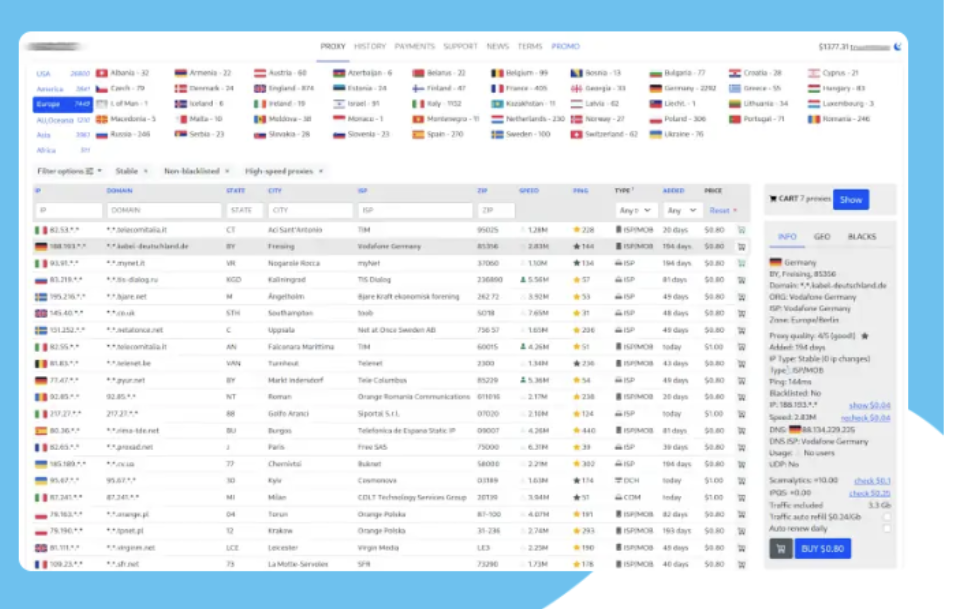
Teams that work across different hours need more than a proxy store with attractive labels. On the homepage, https nsocks net presents NSOCKS as a live environment where users can review current IPs, compare route details, and keep access under account control without entering rigid subscriptions. That structure matters for shift based work because one operator may choose a route, another may review it later, and a third may renew or replace it overnight. A homepage with visible stock, route metrics, and post purchase controls is therefore more useful than a homepage that only pushes one time sales.
Why around the clock planning matters
The homepage says the infrastructure runs non stop with monitored uptime and that each address shows current performance metrics before purchase. That statement matters more for shift based work than it may first appear, because different operators often make decisions at different hours and need a route that behaves predictably from one handoff to the next. A live system with visible performance is easier to manage when one person starts the task and another person inherits it later.
The page also notes that inventory updates constantly, that more than 35,000 IPs are online, and that a strong share of the pool sits in the United States with additional coverage across Europe and other regions. Those details matter for handoffs because they show that the pool is not static and that a team can return later to compare fresh alternatives if a route no longer fits. The table below turns those homepage statements into a simpler shift readiness view. It shows why a live stock system can support continuous operations better than a fixed catalog.
| Shift concern | Homepage signal | Why it helps |
| Route must stay available late | 35,000 plus IPs online now | Gives a larger working pool |
| Team works in several markets | Strong US pool and wider global coverage | Supports regional handoffs |
| Operator changes mid task | Performance metrics stay visible before purchase | Makes the next decision easier |
| Stock changes over time | Inventory updates constantly | Allows replacement without changing providers |
The table matters because shift work is rarely only about one good route. It is about whether the second person can still understand what is available, what the first person chose, and which nearby options can replace it if conditions change. The homepage supports that by showing current stock as a moving resource rather than a closed package. This makes the platform easier to use for rotating teams and time split workflows. ✅
Regional coverage supports cleaner handoffs
A handoff becomes smoother when the next operator can stay in the same market without rebuilding the whole route strategy. The homepage says the system supports country, state, and city filtering and highlights a strong concentration in North America and Europe. That gives one shift a way to document the region that matters and lets the next shift continue from the same geographic base. Location continuity is often the first thing that keeps a handoff understandable.
Live stock reduces overnight surprises
The homepage also says that buyers choose from actual availability rather than theoretical marketing numbers. That matters during overnight or weekend transitions, because a route that only exists in sales language is useless to the next person on duty. A visible live list gives the incoming operator a faster way to review what still exists now, not what was promised hours ago. That kind of transparency reduces avoidable surprises during handoffs. ✅
How the homepage supports shift handoffs
A useful handoff needs more than active stock. It also needs clear route details, account level controls, and a purchasing model that does not trap the next user inside a commitment that no longer fits the task. The homepage supports this with pay as you go pricing, visible geolocation, speed, ISP information, protocol data, and account areas that show purchased proxies, authentication details, and renewal options where available.
The page also explains that advanced search can narrow results by proxy type, state, city, ZIP code, ISP, and domain. That matters because a handoff is weaker when the next operator has to scan a huge undifferentiated pool under time pressure. With structured filters, the incoming shift can follow the same logic used by the previous one instead of improvising from scratch. The table below shows how these homepage tools support a cleaner transfer of responsibility.
| Handoff tool | What the homepage shows | Why the next shift benefits |
| Proxy type filter | LTE Residential Datacenter and more | Keeps route class consistent |
| ISP filter | Provider level narrowing | Helps preserve network logic |
| Speed and protocol data | Visible before purchase | Supports quick route review |
| Purchased proxies area | Active route details remain available | Makes follow up easier |
| Renewal options | Some routes can be extended | Preserves continuity |
| Ticket and Telegram support | Support path remains open | Helps when a handoff hits a problem |
These tools matter because good handoffs depend on memory less than on visibility. If the outgoing shift can leave behind route type, provider choice, and active details inside a readable system, the next shift can act faster and with less risk. The homepage is useful here because it treats the dashboard and buying flow as one connected process. That makes post purchase control part of the service rather than an afterthought. ✨
Pay as you go access fits rotating workloads
The homepage says prices start from 0.40 dollars per 24 hours and that no subscriptions force monthly commitments. This pricing model helps teams that work in short windows because one shift can start a route without creating unnecessary long term pressure for the next shift. A smaller commitment makes it easier to stop, renew, or replace based on evidence rather than on sunk cost. That is one reason the homepage fits operational handoffs well.
Dashboard visibility keeps context alive
The homepage notes that the dashboard provides IP:PORT data, authentication details, and renewed available options. That kind of information is useful during handoffs because the incoming user does not need to ask the previous person to remember every technical detail. The route stays visible inside the account environment where the work continues. That lowers friction between shifts and keeps the context attached to the route itself. ✅
Comparison between structured handoffs and reactive handoffs
A structured handoff starts before the first shift ends. The operator checks whether the active route still fits, notes the important filters, and leaves behind enough information for the next person to continue with confidence. The homepage supports that approach because the route data, stock visibility, and account controls remain in one system instead of being scattered across separate tools.
A reactive handoff begins only after something already failed. The next user opens the account without clear context, sees a route that may no longer fit, and then rushes through the stock list trying to replace it without understanding what made the original choice sensible. The homepage reduces this risk because live inventory, filters, and current route details are visible, but it still rewards teams that prepare early. A clear system works best when users meet it halfway. ❌
Structured handoffs protect route logic
When one shift leaves behind the right clues, the next shift can preserve the logic of the job instead of only preserving a single IP. The important details may include type, geography, provider, protocol, and whether renewal is worth enabling. The homepage provides those signals in a readable format, which makes route logic easier to carry forward. That is more valuable than a rushed replacement that only imitates the previous choice.
Reactive handoffs create unnecessary variation
A reactive change often introduces too many new variables at once. One shift may change provider, geography, and route type together simply because the urgency is high and the comparison was weak. Even a strong homepage cannot fully protect against that if the team waits too long to plan. A calm handoff usually preserves the workflow better than a fast correction. ✨
Step by step guide for a shift ready workflow
A shift ready workflow begins with one simple discipline. The outgoing operator should define what must stay stable for the next person, such as market, provider, route class, or tool compatibility. The homepage makes this practical because those attributes can be checked directly in the stock view and then reviewed again after purchase in the account. That keeps the first part of the handoff concrete.
The next step is to narrow the inventory before the shift ends. The homepage supports filtering by proxy type, place, provider, ZIP code, and domain, so the outgoing user can leave behind not only the active route but also the shortlist logic that produced it. This means the next operator does not have to start from the full pool again. A documented shortlist is often more useful than one undocumented active IP. ✅
The final step is to check the purchased proxies or history area and review whether renewal is available or whether a nearby replacement is more sensible. This should happen while the route is still alive and the task context is still clear. The homepage connects renewal, route details, and support handling to the same account environment, which helps the next shift act without jumping between disconnected systems. A handoff becomes cleaner when those decisions are staged before the actual emergency.
Types and recommendations for different teams
Not every team uses a handoff system in the same way. Some groups care most about staying in the same region, others care about preserving provider identity, and others mainly need a route that can be reviewed and replaced quickly when one task window ends. The homepage is flexible enough to support these different patterns because it combines live stock with detailed search and post purchase control. The stronger choice usually depends on what the next shift must protect first.
For region driven teams
Teams focused on local validation or market specific work should preserve geography before anything else. The homepage helps here because it allows country, state, city, and ZIP filtering, making it easier for the next shift to remain inside the same market view. A good handoff for this team is one where the region stays fixed even if another route has to be selected. That keeps the business logic stable. ✅
For provider sensitive teams
Other teams care more about ISP identity because network context affects how the route behaves for their tools or targets. The homepage shows ISP information before purchase and keeps route details visible after purchase, which makes provider based continuity easier to preserve. For these teams, the outgoing shift should document the provider logic as clearly as the geographic logic. That makes later replacements more precise. ✨
Pros and limits of this handoff model
The homepage is strong for handoff planning because it combines live stock, visible metrics, flexible filtering, pay as you go pricing, and dashboard based route control in one connected system. That gives rotating teams a better chance to preserve logic from one shift to the next instead of starting every time from zero. It is especially useful when continuity depends on route visibility as much as on route quality. A strong handoff needs both.
Main advantages
- ✅ Live stock helps the next shift see current options
- ✅ Visible route details preserve more context
- ✅ Filters support faster and cleaner continuity
- ✅ Dashboard controls make post purchase handoffs easier
Main limits
- ❌ A strong system still needs disciplined users
- ❌ Live stock changes, so old assumptions can expire
- ❌ Weak notes can still damage the next decision
- ❌ Some simple tasks may not need formal handoffs
The homepage works best when it is treated as a shared decision environment rather than a one person storefront. Its live inventory, route transparency, search controls, and account follow through make it easier for one shift to leave behind something the next shift can actually use. That is why NSOCKS feels stronger in rotating operations than many simpler pages that stop being useful once checkout is complete. ✅
This post may contain affiliate links.
More Recommended Ebike/Scooters
Check out these other ebikes and scooters I've reviewed:
- Urban Arrow Ebike – Last year, I made one of the largest purchases I’ve ever made – I bought a $9,000 electric cargo bike from Urban Arrow. In my Urban Arrow review, I will discuss what it is and why I decided to buy this bike, as well as discuss how impactful a bike like this can be on your journey to financial independence.
- Troxus Explorer Step-Thru Ebike – The Troxus Explorer Step-Thru is a fat-tire ebike that I’ve had the pleasure of riding for a while now. It has amazing power, great looks, and awesome range. If you’re looking for a great fat-tire ebike that offers a lot for the price, the Troxus Explorer Step-Thru is definitely one for you to consider. Check out my Troxus Explorer Step-Thru Review.
- Hovsco HovBeta Ebike – The HovBeta is a folding ebike with great specs and a lot of interesting features, and importantly, it’s sold at a good price point. I’ve had a blast commuting with it and using it to do deliveries with DoorDash, Uber Eats, and Grubhub. Check out my Hovsco HovBeta Ebike Review.
- Vanpowers Manidae Ebike – The Vanpowers Manidae is a fat tire ebike that I’ve been riding as my primary winter commuting bike and have also been using it to do food delivery with apps like DoorDash, Uber Eats, and Grubhub. After clocking in a decent number of miles with this ebike, I wanted to write a post sharing what my experience with the Vanpowers Manidae ebike has been like. Check out my Vanpowers Manidae Review.
- Sohamo S3 Step-Thru Folding EBike Review – A Great Value Folding Ebike – The Sohamo S3 Step-Thru Folding Ebike is an entry-level folding ebike that offers a lot of value for the price point. I’ve been riding the Sohamo S3 for a while now, putting the bike through its paces, and I have to say, this bike has exceeded all of my expectations. Check out my Sohamo Review.
- KBO Flip Ebike – The KBO Flip is an excellent bike. I’ve had a great time riding it and think it’s a versatile bike that can be used for a lot of purposes and can fit a variety of lifestyles. It’s worked out great for me as a general commuter bike and as a food delivery bike. Check out my KBO Flip Review.
- Hiboy P7 Commuter Ebike – The Hiboy P7 is an excellent electric commuter bike that’s offered at an affordable price point. The range and speed of this bike are both very good, so you won’t have any trouble getting anywhere you need to go with it. As a food delivery vehicle, this is also good – with how much range it offers, you’ll be able to work all day on a single charge. Check out my Hiboy P7 Commuter Electric Bike Review.
- Himiway Escape Ebike – The Himiway Escape is an interesting bike for anyone looking for a moped-style ebike. If you’re a gig economy worker, the Himiway Escape is particularly interesting and it’s possible to think of it as an investment, especially if you can opt to do deliveries with the Himiway versus using a car. It’s not cheap, but you can definitely make your money back when you compare the mileage you’ll put on your car versus using an ebike. Check out my Himiway Escape Bike Review.
- Espin Sport Ebike – The Espin Sport is a good ebike for someone who is looking for an ebike that feels and rides more like a regular bike. There are many ebikes that are really only bikes in name. In reality, they’re basically electric mopeds. The Espin Sport, by contrast, is a bike you could probably ride without the battery and you’d feel like you’re just riding a regular bike. Check out my Espin Sport Review.
- Varla Eagle One Scooter – The Varla Eagle One is an excellent scooter that can make sense for a lot of people. It can work as a primary mode of transportation. You can use it to work on gig economy apps like DoorDash, Uber Eats, and Grubhub. And it can also be a recreational vehicle if you’d prefer to use it for that. Check out my Varla Eagle One Review.
- Varla Falcon Scooter – The Varla Falcon is an excellent scooter that offers a good amount of power at a lower price point compared to more powerful scooters. It’s not exactly an entry-level scooter, nor is it a high-powered scooter. I think it fits somewhere in-between those two categories – an intermediate scooter if I had to give it a category. Check out my Varla Falcon Review.
- Hiboy S2 Scooter – The Hiboy S2 is an excellent entry-level commuter scooter that's perfect for someone looking to save some money in transportation costs and improve their commute. Check out my Hiboy S2 Review.
- Hiboy S2R Scooter – The Hiboy S2R is one of the more interesting electric scooters I’ve been able to test out. It’s not a high-powered scooter, but for an everyday transport option, it’s very useful, especially given some of the unique features that it has. Indeed, for the price, the Hiboy S2R might be the best value scooter I’ve used. Check out my Hiboy S2R Review.
- Fucare H3 Scooter – The Fucare H3 is a fun scooter and I’ve enjoyed testing it out. For a daily commuter or quick trips or errands, the Fucare H3 is probably the scooter I’ll use. It’s portable and easy to maneuver, so it’s just easier to take on the road when I need it. Check out my Fucare H3 Scooter Review.
More Recommended Investing App Bonuses
For additional investing app bonuses, be sure to check out the ones below:
- M1 Finance ($75) – This is a great robo-advisor that has no fees and allows you to create a customized portfolio based on your risk tolerance. You also get $75 for opening an account. Check out my M1 Finance Referral Bonus – Step-By-Step Guide.
- SoFi Invest ($25) – SoFi Invest is an easy brokerage account bonus that you can earn with just a few minutes of work. Use my SoFi Invest referral link, fund your SoFi Invest brokerage account with just $10 and you’ll get $25 of free stock. I also have a step-by-step guide for the SoFi Invest referral bonus.
- Robinhood (1 free stock) – Robinhood gives you a free stock valued between $2.50-$225 if you open an account using my referral link.
- Public (1 free stock) - Public gives you a free stock valued between $3-$70 if you open an account using my referral link.
More Recommended Bank Account Bonuses
If you’re looking for more easy bank bonuses, check out the below options. These bonuses are all easy to earn and have no fees or minimum balance requirements to worry about.
- Ally Bank ($100) – Of all the banks out there, Ally is, without a doubt, my favorite. At the moment, Ally is offering $100 to customers who open an eligible Ally account and meet the requirements. Here are the step-by-step directions to earn your Ally Bank referral bonus.
- Chime ($100) - Chime is a free bank account that offers a referral bonus if you use a referral link and complete a direct deposit of $200 or more. In practice, any ACH transfer into this account triggers the bonus. This bonus is easy to earn and posts instantly, so you’ll know if you met the requirements as soon as you move money into the account. I wrote a step-by-step guide on how to earn your Chime referral bonus that I recommend you check out.
- US Bank Business ($400/$1200) – This is a fairly easy bank bonus to earn, since there are no direct deposit requirements. In addition, you can open the Silver Business Checking account, which comes with no monthly fees. Check out how to earn this big bonus here.
- Current ($50) – Current is a free fintech bank that’s offering new users a $50 referral bonus after signing up for an account using a referral link. Current is an easy bonus to earn and also gives you access to three savings accounts that pay you 4% interest on up to $2,000. That means you can put away up to $6,000 earning 4% interest. That’s very good and makes Current an account I recommend to everyone. Check out my step-by-step guide on how to earn your Current Bank bonus.
- Novo Bank ($40) - Novo bank is a free business checking account that’s currently offering a $40 bonus if you open a Novo business checking account using a referral link. In addition to being a good bank bonus, Novo is also a good business checking account. It has no monthly fees or minimum balance requirements and operates a good app and website. Indeed, it’s the business checking account I currently use for this blog. Check out my post on how to easily open a Novo account.
- Varo ($25) – Varo is a free fintech banking app similar to Chime or Current. It’s currently offering a $25 bonus to new users that open a new Varo account with a referral link. The bonus for this bank is very easy to meet, all you need to do is spend $20 within 30 days of opening your Varo account. Check out my step-by-step guide to learn how to earn this bonus.

Kevin is an attorney and the blogger behind Financial Panther, a blog about personal finance, travel hacking, and side hustling using the gig economy. He paid off $87,000 worth of student loans in just 2.5 years by choosing not to live like a big shot lawyer.
Kevin is passionate about earning money using the gig economy and you can see all the ways he makes extra income every month in his side hustle reports.
Kevin is also big on using the latest fintech apps to improve his finances. Some of Kevin's favorite fintech apps include:
- SoFi Money. A really good checking account with absolutely no fees. You'll get a $25 referral bonus if you open a SoFi Money account with a referral link, and an additional $300 if you complete a direct deposit.
- 5% Savings Accounts. I'm currently getting 5.24% interest on my savings through a company called Raisin. Opening a Raisin account takes minutes to complete, it's free, and all of your funds are FDIC-insured. I explain how it works, why I'm now using it to store my emergency fund and any other cash savings I have, and why I recommend everyone check it out in this review.
- US Bank Business. US Bank is currently offering new business customers a $400/$1200 signup bonus after opening a new account and meeting certain requirements.
- M1 Finance. This is a great robo-advisor that has no fees and allows you to create a customized portfolio based on your risk tolerance. You also get $75 for opening an account.
- Empower. One of best free apps you can use to monitor your portfolio and track your net worth. This is one of the apps I use to track my financial accounts.
Feel free to send Kevin a message here.

Leave a Reply