Driver Should Know
Driving for apps looks simple until something goes wrong. A fender bender on a delivery run can expose a gap most drivers never knew they had. Your personal auto policy may not cover you at all while you are working.
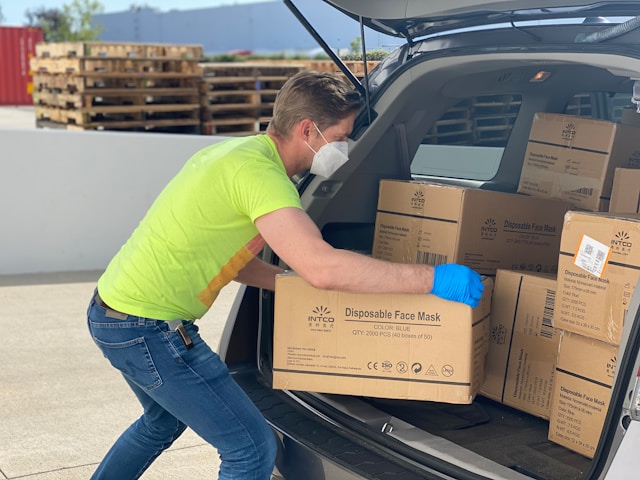
That gap is where real financial risk lives. A specialist like Morgan Insurance Brokers can match cover to a commercial or truck operation as your driving grows. This guide breaks down the insurance every gig and delivery driver should understand.
Why Does Insurance Matter So Much for Gig Drivers?
Because a standard car policy often excludes paid work. The moment you accept a delivery, some insurers treat your car as commercial.
That means a claim during a delivery can be denied outright. You could be left paying for repairs, medical bills, or a lawsuit on your own. For a side hustle meant to make money, that is a serious downside.
The fix is knowing which cover applies when. Once you understand the gap, closing it is usually affordable and simple. The cost of the right policy is small next to one denied claim.
It also protects more than your car. A serious at-fault crash on the job can bring injury claims that dwarf any repair bill. The right liability cover is what stands between a bad day and a lasting financial hole.
Which Types of Cover Should a Driver Know?
Match the cover to how you actually drive. A few core policies handle most gig situations.
- Personal auto insurance, which usually excludes paid delivery work.
- A rideshare or delivery endorsement added to a personal policy.
- Commercial auto insurance for heavier or full-time use.
- Goods-in-transit cover, which protects the items you carry.
- Public liability, for injury or damage you cause on the job.
Most casual drivers start with an endorsement on their existing policy. As the work grows, a commercial policy often becomes the better fit.
What Changes When You Scale Up to a Van or Truck?
Everything gets bigger, including the rules. A van or truck moves you from casual gig work into genuine commercial territory.
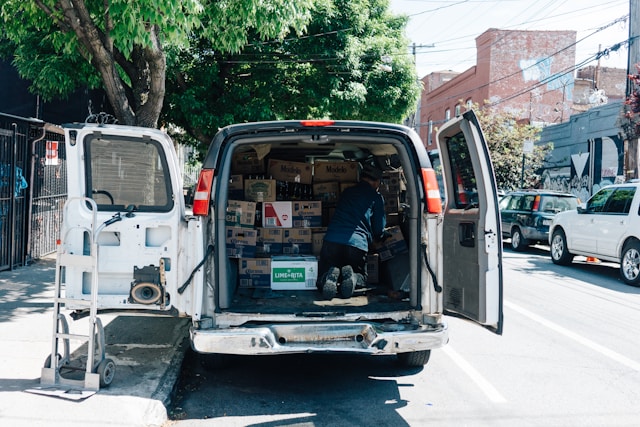
Larger vehicles carry more risk, so insurers price them differently. The rules for heavy vehicles are stricter, covering registration, safety, and operating standards. The best delivery cars are the ones that stay cheap to run and insure at this stage.
When Does a Broker Beat Buying Direct?
Once your setup gets complex, a broker earns their keep. They compare commercial products that are hard to find and quote online.
A broker also spots gaps a generic policy leaves open. For anyone running a van, truck, or small fleet, that expertise saves both money and nasty surprises.
How Do You Keep Premiums Reasonable?
Small habits lower the bill over time. Insurers reward safe, low-risk drivers.
- Keep a clean driving record, which is the biggest lever.
- Compare quotes, since car insurance pricing varies widely.
- Choose a sensible excess you can actually afford.
- Bundle policies where one insurer covers more of your needs.
- Only pay for cover you use, and review it each year.
Premiums are not fixed forever. A yearly review often turns up a better rate or a policy that fits your current work.
When Should You Use a Broker?
When the stakes or the complexity rise. A quick delivery gig is simple, but a growing operation rarely is.
Brokers shine once you add vehicles, employees, or valuable cargo. Anyone deep in the gig economy who is scaling up benefits from a professional reading the fine print. The advice usually costs nothing up front, since brokers are paid by the insurer.
Think of a broker as a guide through a confusing market. The right one matches your cover to your real exposure, not a generic template.
They also handle the claim when something goes wrong. Having someone argue your corner with the insurer is worth a lot on the worst day of your driving year. For a growing operation, that support can be the difference between a quick recovery and a stalled business.
What Every Driver Should Remember
- Check whether your personal policy excludes paid delivery work.
- Add an endorsement or commercial policy to close the gap.
- Expect stricter rules once you drive a van or truck.
- Compare quotes and pick an excess you can afford.
- Review your cover at least once every 12 months.
- Use a broker when your operation grows complex.
Driving Covered, Not Exposed
Delivery work can be a great earner, but only if one bad day cannot wipe out the profit. Understand the gap in a personal policy, add the cover that fits, and scale it up as your driving grows. Do that, and every trip is one less thing to worry about.
Frequently Asked Questions
Does my personal car insurance cover delivery driving?
Often it does not, because insurers treat paid delivery as commercial use. A claim made while working can be denied under a personal policy. Ask your insurer directly and add an endorsement if you deliver regularly.
What is a rideshare or delivery endorsement?
It is an add-on that extends a personal policy to cover app-based driving. It usually costs far less than a full commercial policy. For part-time drivers, it is often the simplest way to close the coverage gap.
Do I need special insurance for a delivery van?
Usually yes, since a van or truck counts as commercial use. Coverage, registration, and safety rules all differ from a personal car. A commercial policy or a broker’s help is the safer route as you scale.
Is using an insurance broker worth the cost?
For complex or growing operations, often yes. Brokers compare products you cannot easily find alone and flag gaps in your cover. Since insurers usually pay them, the upfront cost to you is typically nothing.
This post may contain affiliate links.
More Recommended Ebike/Scooters
Check out these other ebikes and scooters I've reviewed:
- Urban Arrow Ebike – Last year, I made one of the largest purchases I’ve ever made – I bought a $9,000 electric cargo bike from Urban Arrow. In my Urban Arrow review, I will discuss what it is and why I decided to buy this bike, as well as discuss how impactful a bike like this can be on your journey to financial independence.
- Troxus Explorer Step-Thru Ebike – The Troxus Explorer Step-Thru is a fat-tire ebike that I’ve had the pleasure of riding for a while now. It has amazing power, great looks, and awesome range. If you’re looking for a great fat-tire ebike that offers a lot for the price, the Troxus Explorer Step-Thru is definitely one for you to consider. Check out my Troxus Explorer Step-Thru Review.
- Hovsco HovBeta Ebike – The HovBeta is a folding ebike with great specs and a lot of interesting features, and importantly, it’s sold at a good price point. I’ve had a blast commuting with it and using it to do deliveries with DoorDash, Uber Eats, and Grubhub. Check out my Hovsco HovBeta Ebike Review.
- Vanpowers Manidae Ebike – The Vanpowers Manidae is a fat tire ebike that I’ve been riding as my primary winter commuting bike and have also been using it to do food delivery with apps like DoorDash, Uber Eats, and Grubhub. After clocking in a decent number of miles with this ebike, I wanted to write a post sharing what my experience with the Vanpowers Manidae ebike has been like. Check out my Vanpowers Manidae Review.
- Sohamo S3 Step-Thru Folding EBike Review – A Great Value Folding Ebike – The Sohamo S3 Step-Thru Folding Ebike is an entry-level folding ebike that offers a lot of value for the price point. I’ve been riding the Sohamo S3 for a while now, putting the bike through its paces, and I have to say, this bike has exceeded all of my expectations. Check out my Sohamo Review.
- KBO Flip Ebike – The KBO Flip is an excellent bike. I’ve had a great time riding it and think it’s a versatile bike that can be used for a lot of purposes and can fit a variety of lifestyles. It’s worked out great for me as a general commuter bike and as a food delivery bike. Check out my KBO Flip Review.
- Hiboy P7 Commuter Ebike – The Hiboy P7 is an excellent electric commuter bike that’s offered at an affordable price point. The range and speed of this bike are both very good, so you won’t have any trouble getting anywhere you need to go with it. As a food delivery vehicle, this is also good – with how much range it offers, you’ll be able to work all day on a single charge. Check out my Hiboy P7 Commuter Electric Bike Review.
- Himiway Escape Ebike – The Himiway Escape is an interesting bike for anyone looking for a moped-style ebike. If you’re a gig economy worker, the Himiway Escape is particularly interesting and it’s possible to think of it as an investment, especially if you can opt to do deliveries with the Himiway versus using a car. It’s not cheap, but you can definitely make your money back when you compare the mileage you’ll put on your car versus using an ebike. Check out my Himiway Escape Bike Review.
- Espin Sport Ebike – The Espin Sport is a good ebike for someone who is looking for an ebike that feels and rides more like a regular bike. There are many ebikes that are really only bikes in name. In reality, they’re basically electric mopeds. The Espin Sport, by contrast, is a bike you could probably ride without the battery and you’d feel like you’re just riding a regular bike. Check out my Espin Sport Review.
- Varla Eagle One Scooter – The Varla Eagle One is an excellent scooter that can make sense for a lot of people. It can work as a primary mode of transportation. You can use it to work on gig economy apps like DoorDash, Uber Eats, and Grubhub. And it can also be a recreational vehicle if you’d prefer to use it for that. Check out my Varla Eagle One Review.
- Varla Falcon Scooter – The Varla Falcon is an excellent scooter that offers a good amount of power at a lower price point compared to more powerful scooters. It’s not exactly an entry-level scooter, nor is it a high-powered scooter. I think it fits somewhere in-between those two categories – an intermediate scooter if I had to give it a category. Check out my Varla Falcon Review.
- Hiboy S2 Scooter – The Hiboy S2 is an excellent entry-level commuter scooter that's perfect for someone looking to save some money in transportation costs and improve their commute. Check out my Hiboy S2 Review.
- Hiboy S2R Scooter – The Hiboy S2R is one of the more interesting electric scooters I’ve been able to test out. It’s not a high-powered scooter, but for an everyday transport option, it’s very useful, especially given some of the unique features that it has. Indeed, for the price, the Hiboy S2R might be the best value scooter I’ve used. Check out my Hiboy S2R Review.
- Fucare H3 Scooter – The Fucare H3 is a fun scooter and I’ve enjoyed testing it out. For a daily commuter or quick trips or errands, the Fucare H3 is probably the scooter I’ll use. It’s portable and easy to maneuver, so it’s just easier to take on the road when I need it. Check out my Fucare H3 Scooter Review.
More Recommended Investing App Bonuses
For additional investing app bonuses, be sure to check out the ones below:
- M1 Finance ($75) – This is a great robo-advisor that has no fees and allows you to create a customized portfolio based on your risk tolerance. You also get $75 for opening an account. Check out my M1 Finance Referral Bonus – Step-By-Step Guide.
- SoFi Invest ($25) – SoFi Invest is an easy brokerage account bonus that you can earn with just a few minutes of work. Use my SoFi Invest referral link, fund your SoFi Invest brokerage account with just $10 and you’ll get $25 of free stock. I also have a step-by-step guide for the SoFi Invest referral bonus.
- Robinhood (1 free stock) – Robinhood gives you a free stock valued between $2.50-$225 if you open an account using my referral link.
- Public (1 free stock) - Public gives you a free stock valued between $3-$70 if you open an account using my referral link.
More Recommended Bank Account Bonuses
If you’re looking for more easy bank bonuses, check out the below options. These bonuses are all easy to earn and have no fees or minimum balance requirements to worry about.
- Ally Bank ($100) – Of all the banks out there, Ally is, without a doubt, my favorite. At the moment, Ally is offering $100 to customers who open an eligible Ally account and meet the requirements. Here are the step-by-step directions to earn your Ally Bank referral bonus.
- Chime ($100) - Chime is a free bank account that offers a referral bonus if you use a referral link and complete a direct deposit of $200 or more. In practice, any ACH transfer into this account triggers the bonus. This bonus is easy to earn and posts instantly, so you’ll know if you met the requirements as soon as you move money into the account. I wrote a step-by-step guide on how to earn your Chime referral bonus that I recommend you check out.
- US Bank Business ($400/$1200) – This is a fairly easy bank bonus to earn, since there are no direct deposit requirements. In addition, you can open the Silver Business Checking account, which comes with no monthly fees. Check out how to earn this big bonus here.
- Current ($50) – Current is a free fintech bank that’s offering new users a $50 referral bonus after signing up for an account using a referral link. Current is an easy bonus to earn and also gives you access to three savings accounts that pay you 4% interest on up to $2,000. That means you can put away up to $6,000 earning 4% interest. That’s very good and makes Current an account I recommend to everyone. Check out my step-by-step guide on how to earn your Current Bank bonus.
- Novo Bank ($40) - Novo bank is a free business checking account that’s currently offering a $40 bonus if you open a Novo business checking account using a referral link. In addition to being a good bank bonus, Novo is also a good business checking account. It has no monthly fees or minimum balance requirements and operates a good app and website. Indeed, it’s the business checking account I currently use for this blog. Check out my post on how to easily open a Novo account.
- Varo ($25) – Varo is a free fintech banking app similar to Chime or Current. It’s currently offering a $25 bonus to new users that open a new Varo account with a referral link. The bonus for this bank is very easy to meet, all you need to do is spend $20 within 30 days of opening your Varo account. Check out my step-by-step guide to learn how to earn this bonus.

Kevin is an attorney and the blogger behind Financial Panther, a blog about personal finance, travel hacking, and side hustling using the gig economy. He paid off $87,000 worth of student loans in just 2.5 years by choosing not to live like a big shot lawyer.
Kevin is passionate about earning money using the gig economy and you can see all the ways he makes extra income every month in his side hustle reports.
Kevin is also big on using the latest fintech apps to improve his finances. Some of Kevin's favorite fintech apps include:
- SoFi Money. A really good checking account with absolutely no fees. You'll get a $25 referral bonus if you open a SoFi Money account with a referral link, and an additional $300 if you complete a direct deposit.
- 5% Savings Accounts. I'm currently getting 5.24% interest on my savings through a company called Raisin. Opening a Raisin account takes minutes to complete, it's free, and all of your funds are FDIC-insured. I explain how it works, why I'm now using it to store my emergency fund and any other cash savings I have, and why I recommend everyone check it out in this review.
- US Bank Business. US Bank is currently offering new business customers a $400/$1200 signup bonus after opening a new account and meeting certain requirements.
- M1 Finance. This is a great robo-advisor that has no fees and allows you to create a customized portfolio based on your risk tolerance. You also get $75 for opening an account.
- Empower. One of best free apps you can use to monitor your portfolio and track your net worth. This is one of the apps I use to track my financial accounts.
Feel free to send Kevin a message here.

Leave a Reply