Healthcare organizations don’t just deal with complex compliance software needs; they deal with them under constant regulatory pressure, with documentation demands that never slow down. Keeping pace with HIPAA, HITECH, and overlapping federal frameworks while consolidating data across siloed departments is genuinely hard work. After reviewing dozens of platforms used by hospitals, clinics, and large health systems, the gap between purpose-built tools and generic alternatives becomes obvious fast. This guide covers five platforms that stand out for healthcare regulatory adherence, audit readiness, and real-world usability.
The vetting process for this list
Public information drove every decision here. User reviews, case studies, feature documentation, and ratings from established review platforms were all pulled and compared. Only platforms with a clear track record inside enterprise software environments made the cut.
→ See the full research breakdown
- ComplyAssistant – Best for healthcare compliance and GRC software
- Drata – Best for enterprise security and compliance automation
- MetricStream – Best for enterprise Governance, Risk, and Compliance (GRC) management
- SAI360 – Best for enterprise GRC and ESG compliance management
- HealthStream – Best for healthcare enterprise workforce and credentialing solutions
The Difference the Right Compliance Software Makes
Picking the wrong platform costs more than money. When compliance data lives in spreadsheets and siloed systems, teams spend weeks preparing for audits that should take days. The right tool pulls everything into one place, so your audit finding rate drops and your policy attestation completion rate actually means something.
Healthcare organizations face a unique pressure: regulatory frameworks (SOX, GDPR, HIPAA, PCI-DSS, ISO 27001) don’t pause while your team catches up. Overlapping requirements from federal, state, and accreditation bodies hit simultaneously.
A well-chosen platform cuts mean time to detect and remediate compliance violations, keeps the percentage of controls passing automated testing high, and gives leadership real visibility into risk before auditors show up. That kind of outcome is hard to match with a general-purpose tool.
The 5 Best Compliance Software: Quick Comparison
Note: All data in this table is sourced from review platforms and the official websites of the listed companies.
| Company Name | Years Operating | Team Size | Headquartered In |
| ComplyAssistant | Est. 2002 | 11-50 | Woodbridge, New Jersey |
| Drata | Est. 2020 | 723 | San Diego, California |
| MetricStream | Est. 1999 | 1,266 | San Jose, CA |
| SAI360 | 25+ years | 438 | Chicago, IL |
| HealthStream | Est. 1990 | 1,093 | Nashville, Tennessee |
1. ComplyAssistant – Best for Healthcare Compliance and GRC Software
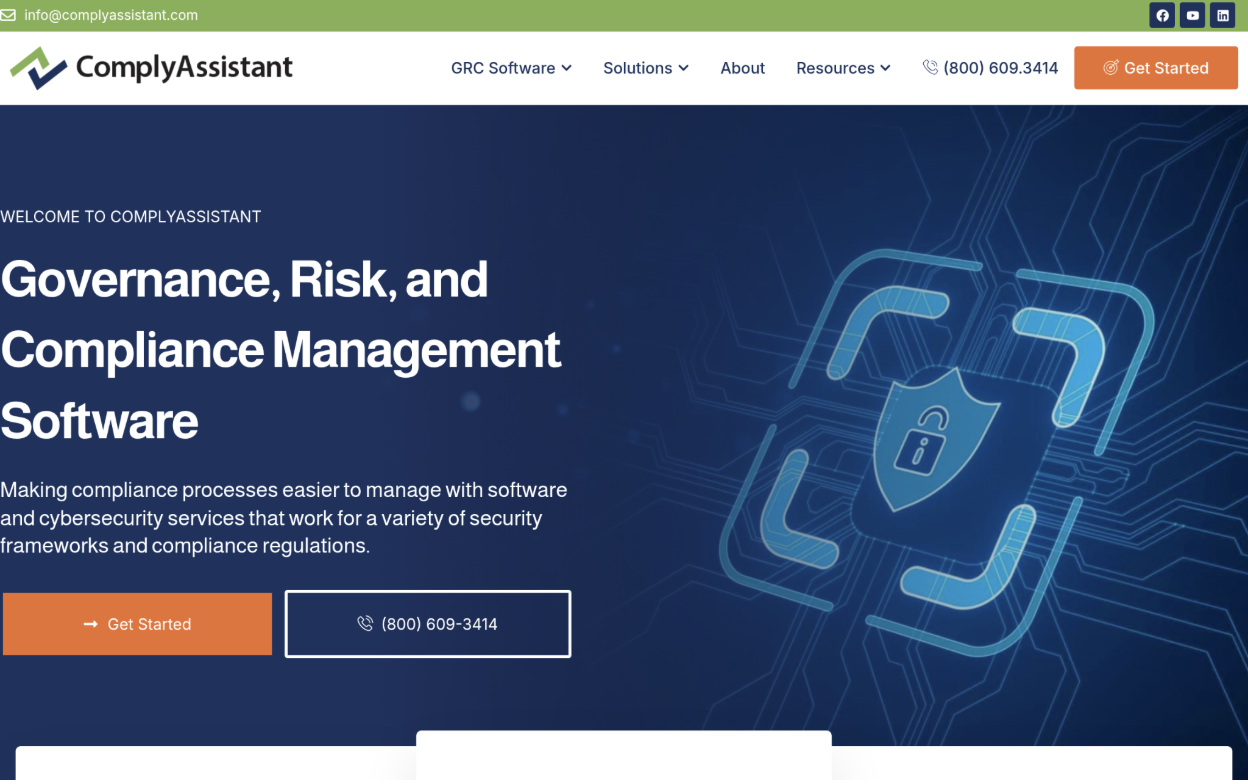
Where Does ComplyAssistant Fit in the Market?
ComplyAssistant sits squarely in the healthcare GRC space, and that focus is exactly what makes them worth paying attention to. Founded in 2002, they’ve spent over two decades building tools for hospitals and health systems working with HIPAA, HITECH, HITRUST, and NIST requirements. Their portal has been in active development since 2009, which shows in how well it handles real healthcare workflows. Clients like HackensackUMC Palisades trust the platform, and that trust didn’t come from a flashy pitch deck. Organizations that need a dedicated, flexible approach to meeting rules and standards will find the healthcare compliance management solution by ComplyAssistant built around the problems they actually face.
Why Is ComplyAssistant a Contender for Compliance Software?
Healthcare organizations dealing with fragmented compliance data across multiple facilities and frameworks need a platform that speaks their language from day one. That kind of deep domain focus, combined with unlimited user and location licensing, means the platform scales without creating new cost surprises.
From the User Reviews:
Users consistently flag the platform’s responsiveness as a standout quality. The team’s “small but mighty” approach means clients get direct access and faster adjustments when regulatory requirements shift. That kind of service model is rare at this price point in the GRC space.
2. Drata – Best for Enterprise Security and Compliance Automation
Where Does Drata Fit in the Market?
Drata was founded in 2020, which makes it the youngest platform on this list, but its growth trajectory is genuinely impressive. The platform automates continuous security control monitoring and evidence collection across 14-plus compliance frameworks including SOC 2, HIPAA, GDPR, and ISO 27001. With over 4,000 customers and 75-plus integrations with tools like AWS, GitHub, and Okta, Drata fits best in tech-forward organizations that want audit prep to be less painful. A $2B valuation by late 2022 signals strong market confidence.
Why Is Drata a Contender for Compliance Software?
Manual evidence collection is one of the biggest time drains in any compliance program, and Drata’s continuous monitoring model directly cuts that burden. Teams using Drata typically see faster audit cycles and lower repeat finding rates because controls are tracked in real time rather than scrambled together before each audit.
From the User Reviews:
Users frequently mention how much time Drata saves during audit preparation, especially for teams managing multiple frameworks at once. The depth of connections to other systems gets called out regularly as a differentiator. The platform works best for organizations that already run on modern cloud infrastructure.
3. MetricStream – Best for Enterprise Governance, Risk, and Compliance (GRC) Management
Where Does MetricStream Fit in the Market?
MetricStream has been in the GRC space since 1999, and that longevity shows in the breadth of what they cover. The platform handles regulatory compliance management, internal audit, SOX compliance, cyber GRC, and third-party risk management, all within a single cloud environment. They serve over one million GRC professionals across 35-plus countries, with clients like Shell, Siemens Energy, and Zurich Insurance on the roster. Their low-code/no-code platform reportedly removes 80 to 90 percent of repetitive GRC tasks, which is a serious productivity claim (one backed by real enterprise deployments).
Why Is MetricStream a Contender for Compliance Software?
Large organizations managing compliance across dozens of business units need a platform that doesn’t force them to choose between depth and scale. MetricStream’s AI-first approach to GRC means it can flag risks and surface audit findings faster than teams working through manual review cycles.
From the User Reviews:
Reviewers tend to note MetricStream’s strength in handling difficult, multi-framework environments without losing visibility. The platform’s depth earns consistent praise, though some users note that setup takes real planning. That’s expected at this level of enterprise capability.
4. SAI360 – Best for Enterprise GRC and ESG Compliance Management
Where Does SAI360 Fit in the Market?
SAI360 brings over 25 years of experience to an increasingly crowded GRC market, and what separates them is the intentional connection between ethics, risk, and compliance data in one platform. Their system helps teams spot issues earlier instead of discovering them mid-audit (which is exactly when you don’t want surprises). Three distinct editions, from Essentials to Enterprise, give organizations room to grow into the platform rather than paying for features they don’t need yet. Clients like Colgate-Palmolive and Kraft Heinz represent the kind of large, regulated environments where SAI360 genuinely earns its place.
Why Is SAI360 a Contender for Compliance Software?
Third-party risk management at enterprise scale is notoriously difficult to track, and SAI360’s connected data model gives compliance teams a cleaner picture of where exposure lives across vendor relationships. That kind of proactive risk identification directly shortens third-party risk assessment cycle time, which is one of the harder metrics to move in large organizations.
From the User Reviews:
Users value SAI360’s flexibility and the ability to configure the platform around their specific workflows. The ESG capabilities get called out as a genuine differentiator, especially for organizations with board-level reporting requirements. The platform grows alongside the organization without requiring a full rebuild.
5. HealthStream – Best for Healthcare Enterprise Workforce and Credentialing Solutions
Where Does HealthStream Fit in the Market?
HealthStream has been in the healthcare software space since 1990, and their scale is hard to argue with. The platform serves more than 5,000 healthcare customers and supports over 5.5 million healthcare professionals, with adoption across more than 70 percent of U.S. hospital and health systems. Their focus sits at the intersection of workforce development, training, credentialing, and performance assessment, which makes them a different kind of compliance tool than the others on this list (not pure GRC, but deeply important for regulatory adherence in clinical settings). Products like SafetyQ and ComplyQ speak directly to healthcare-specific regulatory needs.
Why Is HealthStream a Contender for Compliance Software?
Healthcare organizations dealing with policy attestation completion rates and staff credentialing backlogs need a platform built for clinical workforce requirements, not adapted from a general enterprise tool. HealthStream’s $299M in trailing twelve-month revenue and their consistent recognition on G2’s Best Healthcare Software list show that the market has validated this approach at scale.
From the User Reviews:
Users point to HealthStream’s breadth as both a strength and a consideration: the platform covers a lot of ground, so getting the most out of it takes some internal alignment. That said, reviewers consistently praise the learning and credentialing modules for reducing compliance gaps in clinical staff training. Healthcare HR and compliance teams tend to find real value here.
The Process Behind This Ranking
Building a list like this requires more than a quick search. The ranking process started with a wide sweep of the healthcare and enterprise compliance software market, then worked backward to identify which platforms actually belong on a shortlist for hospitals, clinics, and health systems.
Data Collection Fundamentals
The process began by pulling information from multiple source types: software directories, industry review platforms, company websites, published case studies, and analyst reports. The goal was to build an initial long list of platforms that appeared regularly across these sources, not just those with the loudest marketing presence. Volume of mentions mattered less than consistency across independent channels.
Pre-Verification Phase
From that long list, options without sufficient verifiable information were removed early. Platforms that lacked user reviews from identifiable enterprise or healthcare clients, showed thin case study documentation, or had review patterns that looked inconsistent were set aside. This phase narrowed the field considerably before any deeper evaluation began.
The Verification Phase
Each remaining platform was cross-referenced against what their official website claimed versus what real users described in reviews. Where a company claimed a specific capability, that claim was checked against documented user experiences and publicly available deployment stories. Discrepancies between marketing claims and user-reported outcomes were noted and factored into final placement decisions.
Tracking Authority Markers
Recognition from independent sources carries real weight in this evaluation. Industry analyst placements (such as Verdantix, Chartis Research, and G2 Grid Reports), awards from credible third-party organizations, and mentions in established publications were tracked for each platform. A company consistently named across multiple independent authority sources signals that their standing reflects real market performance, not just internal promotion.
Compliance Software Proof Points
The final filter focused on evidence of real compliance software delivery: dedicated service pages covering specific regulatory frameworks, verified client reviews from compliance officers and risk managers, and case studies showing measurable outcomes. Platforms that could demonstrate results across multiple regulatory adherence scenarios, with documented outcomes from real healthcare or enterprise clients, earned priority consideration. Those with thinner proof of compliance-specific deployment were ranked lower or excluded.
How to Pick Your Best Match
Every platform on this list does something well, but the right one for your organization depends on where your compliance gaps actually live. Here’s a practical framework for narrowing it down.
- Industry/Domain Experience: Look at how long the platform has served healthcare or your specific regulatory environment. A tool built for tech companies can handle HIPAA, but one built exclusively for healthcare understands the workflow context around it.
- Features and Service: Match the platform’s feature set to your actual needs. If you need GRC, audit management, and third-party risk in one place, confirm those capabilities are mature, not promises for later.
- Pricing Structure: Some platforms price per user, others offer unlimited licensing (ComplyAssistant takes the latter approach). For large health systems with many locations, unlimited licensing can make a big cost difference over time.
- Results Measurement: Ask each vendor how they help you track audit finding rate, policy attestation completion rate, and mean time to remediate. If they can’t answer that clearly, that’s worth noting.
- Industry Knowledge and Compliance: Verify that the platform supports the specific frameworks your organization is accountable to, whether that’s HIPAA, HITRUST, SOX, or a combination. Framework depth matters more than framework count.
Closing Thoughts
Choosing the right compliance software for a healthcare organization isn’t a minor procurement decision. The platforms on this list each bring something different, from ComplyAssistant’s healthcare-first GRC depth to HealthStream’s workforce and credentialing scale. The best fit depends on your framework requirements, team size, and how much automation you need in your audit process. As regulatory requirements across healthcare continue to grow in scope, purpose-built platforms with proven healthcare track records will keep pulling further ahead.
This post may contain affiliate links.
More Recommended Ebike/Scooters
Check out these other ebikes and scooters I've reviewed:
- Urban Arrow Ebike – Last year, I made one of the largest purchases I’ve ever made – I bought a $9,000 electric cargo bike from Urban Arrow. In my Urban Arrow review, I will discuss what it is and why I decided to buy this bike, as well as discuss how impactful a bike like this can be on your journey to financial independence.
- Troxus Explorer Step-Thru Ebike – The Troxus Explorer Step-Thru is a fat-tire ebike that I’ve had the pleasure of riding for a while now. It has amazing power, great looks, and awesome range. If you’re looking for a great fat-tire ebike that offers a lot for the price, the Troxus Explorer Step-Thru is definitely one for you to consider. Check out my Troxus Explorer Step-Thru Review.
- Hovsco HovBeta Ebike – The HovBeta is a folding ebike with great specs and a lot of interesting features, and importantly, it’s sold at a good price point. I’ve had a blast commuting with it and using it to do deliveries with DoorDash, Uber Eats, and Grubhub. Check out my Hovsco HovBeta Ebike Review.
- Vanpowers Manidae Ebike – The Vanpowers Manidae is a fat tire ebike that I’ve been riding as my primary winter commuting bike and have also been using it to do food delivery with apps like DoorDash, Uber Eats, and Grubhub. After clocking in a decent number of miles with this ebike, I wanted to write a post sharing what my experience with the Vanpowers Manidae ebike has been like. Check out my Vanpowers Manidae Review.
- Sohamo S3 Step-Thru Folding EBike Review – A Great Value Folding Ebike – The Sohamo S3 Step-Thru Folding Ebike is an entry-level folding ebike that offers a lot of value for the price point. I’ve been riding the Sohamo S3 for a while now, putting the bike through its paces, and I have to say, this bike has exceeded all of my expectations. Check out my Sohamo Review.
- KBO Flip Ebike – The KBO Flip is an excellent bike. I’ve had a great time riding it and think it’s a versatile bike that can be used for a lot of purposes and can fit a variety of lifestyles. It’s worked out great for me as a general commuter bike and as a food delivery bike. Check out my KBO Flip Review.
- Hiboy P7 Commuter Ebike – The Hiboy P7 is an excellent electric commuter bike that’s offered at an affordable price point. The range and speed of this bike are both very good, so you won’t have any trouble getting anywhere you need to go with it. As a food delivery vehicle, this is also good – with how much range it offers, you’ll be able to work all day on a single charge. Check out my Hiboy P7 Commuter Electric Bike Review.
- Himiway Escape Ebike – The Himiway Escape is an interesting bike for anyone looking for a moped-style ebike. If you’re a gig economy worker, the Himiway Escape is particularly interesting and it’s possible to think of it as an investment, especially if you can opt to do deliveries with the Himiway versus using a car. It’s not cheap, but you can definitely make your money back when you compare the mileage you’ll put on your car versus using an ebike. Check out my Himiway Escape Bike Review.
- Espin Sport Ebike – The Espin Sport is a good ebike for someone who is looking for an ebike that feels and rides more like a regular bike. There are many ebikes that are really only bikes in name. In reality, they’re basically electric mopeds. The Espin Sport, by contrast, is a bike you could probably ride without the battery and you’d feel like you’re just riding a regular bike. Check out my Espin Sport Review.
- Varla Eagle One Scooter – The Varla Eagle One is an excellent scooter that can make sense for a lot of people. It can work as a primary mode of transportation. You can use it to work on gig economy apps like DoorDash, Uber Eats, and Grubhub. And it can also be a recreational vehicle if you’d prefer to use it for that. Check out my Varla Eagle One Review.
- Varla Falcon Scooter – The Varla Falcon is an excellent scooter that offers a good amount of power at a lower price point compared to more powerful scooters. It’s not exactly an entry-level scooter, nor is it a high-powered scooter. I think it fits somewhere in-between those two categories – an intermediate scooter if I had to give it a category. Check out my Varla Falcon Review.
- Hiboy S2 Scooter – The Hiboy S2 is an excellent entry-level commuter scooter that's perfect for someone looking to save some money in transportation costs and improve their commute. Check out my Hiboy S2 Review.
- Hiboy S2R Scooter – The Hiboy S2R is one of the more interesting electric scooters I’ve been able to test out. It’s not a high-powered scooter, but for an everyday transport option, it’s very useful, especially given some of the unique features that it has. Indeed, for the price, the Hiboy S2R might be the best value scooter I’ve used. Check out my Hiboy S2R Review.
- Fucare H3 Scooter – The Fucare H3 is a fun scooter and I’ve enjoyed testing it out. For a daily commuter or quick trips or errands, the Fucare H3 is probably the scooter I’ll use. It’s portable and easy to maneuver, so it’s just easier to take on the road when I need it. Check out my Fucare H3 Scooter Review.
More Recommended Investing App Bonuses
For additional investing app bonuses, be sure to check out the ones below:
- M1 Finance ($75) – This is a great robo-advisor that has no fees and allows you to create a customized portfolio based on your risk tolerance. You also get $75 for opening an account. Check out my M1 Finance Referral Bonus – Step-By-Step Guide.
- SoFi Invest ($25) – SoFi Invest is an easy brokerage account bonus that you can earn with just a few minutes of work. Use my SoFi Invest referral link, fund your SoFi Invest brokerage account with just $10 and you’ll get $25 of free stock. I also have a step-by-step guide for the SoFi Invest referral bonus.
- Robinhood (1 free stock) – Robinhood gives you a free stock valued between $2.50-$225 if you open an account using my referral link.
- Public (1 free stock) - Public gives you a free stock valued between $3-$70 if you open an account using my referral link.
More Recommended Bank Account Bonuses
If you’re looking for more easy bank bonuses, check out the below options. These bonuses are all easy to earn and have no fees or minimum balance requirements to worry about.
- Ally Bank ($100) – Of all the banks out there, Ally is, without a doubt, my favorite. At the moment, Ally is offering $100 to customers who open an eligible Ally account and meet the requirements. Here are the step-by-step directions to earn your Ally Bank referral bonus.
- Chime ($100) - Chime is a free bank account that offers a referral bonus if you use a referral link and complete a direct deposit of $200 or more. In practice, any ACH transfer into this account triggers the bonus. This bonus is easy to earn and posts instantly, so you’ll know if you met the requirements as soon as you move money into the account. I wrote a step-by-step guide on how to earn your Chime referral bonus that I recommend you check out.
- US Bank Business ($400/$1200) – This is a fairly easy bank bonus to earn, since there are no direct deposit requirements. In addition, you can open the Silver Business Checking account, which comes with no monthly fees. Check out how to earn this big bonus here.
- Current ($50) – Current is a free fintech bank that’s offering new users a $50 referral bonus after signing up for an account using a referral link. Current is an easy bonus to earn and also gives you access to three savings accounts that pay you 4% interest on up to $2,000. That means you can put away up to $6,000 earning 4% interest. That’s very good and makes Current an account I recommend to everyone. Check out my step-by-step guide on how to earn your Current Bank bonus.
- Novo Bank ($40) - Novo bank is a free business checking account that’s currently offering a $40 bonus if you open a Novo business checking account using a referral link. In addition to being a good bank bonus, Novo is also a good business checking account. It has no monthly fees or minimum balance requirements and operates a good app and website. Indeed, it’s the business checking account I currently use for this blog. Check out my post on how to easily open a Novo account.
- Varo ($25) – Varo is a free fintech banking app similar to Chime or Current. It’s currently offering a $25 bonus to new users that open a new Varo account with a referral link. The bonus for this bank is very easy to meet, all you need to do is spend $20 within 30 days of opening your Varo account. Check out my step-by-step guide to learn how to earn this bonus.

Kevin is an attorney and the blogger behind Financial Panther, a blog about personal finance, travel hacking, and side hustling using the gig economy. He paid off $87,000 worth of student loans in just 2.5 years by choosing not to live like a big shot lawyer.
Kevin is passionate about earning money using the gig economy and you can see all the ways he makes extra income every month in his side hustle reports.
Kevin is also big on using the latest fintech apps to improve his finances. Some of Kevin's favorite fintech apps include:
- SoFi Money. A really good checking account with absolutely no fees. You'll get a $25 referral bonus if you open a SoFi Money account with a referral link, and an additional $300 if you complete a direct deposit.
- 5% Savings Accounts. I'm currently getting 5.24% interest on my savings through a company called Raisin. Opening a Raisin account takes minutes to complete, it's free, and all of your funds are FDIC-insured. I explain how it works, why I'm now using it to store my emergency fund and any other cash savings I have, and why I recommend everyone check it out in this review.
- US Bank Business. US Bank is currently offering new business customers a $400/$1200 signup bonus after opening a new account and meeting certain requirements.
- M1 Finance. This is a great robo-advisor that has no fees and allows you to create a customized portfolio based on your risk tolerance. You also get $75 for opening an account.
- Empower. One of best free apps you can use to monitor your portfolio and track your net worth. This is one of the apps I use to track my financial accounts.
Feel free to send Kevin a message here.

Leave a Reply